4154 Rowan Rd, New Port Richey FL 34653
jana@itmattersinsurance.com
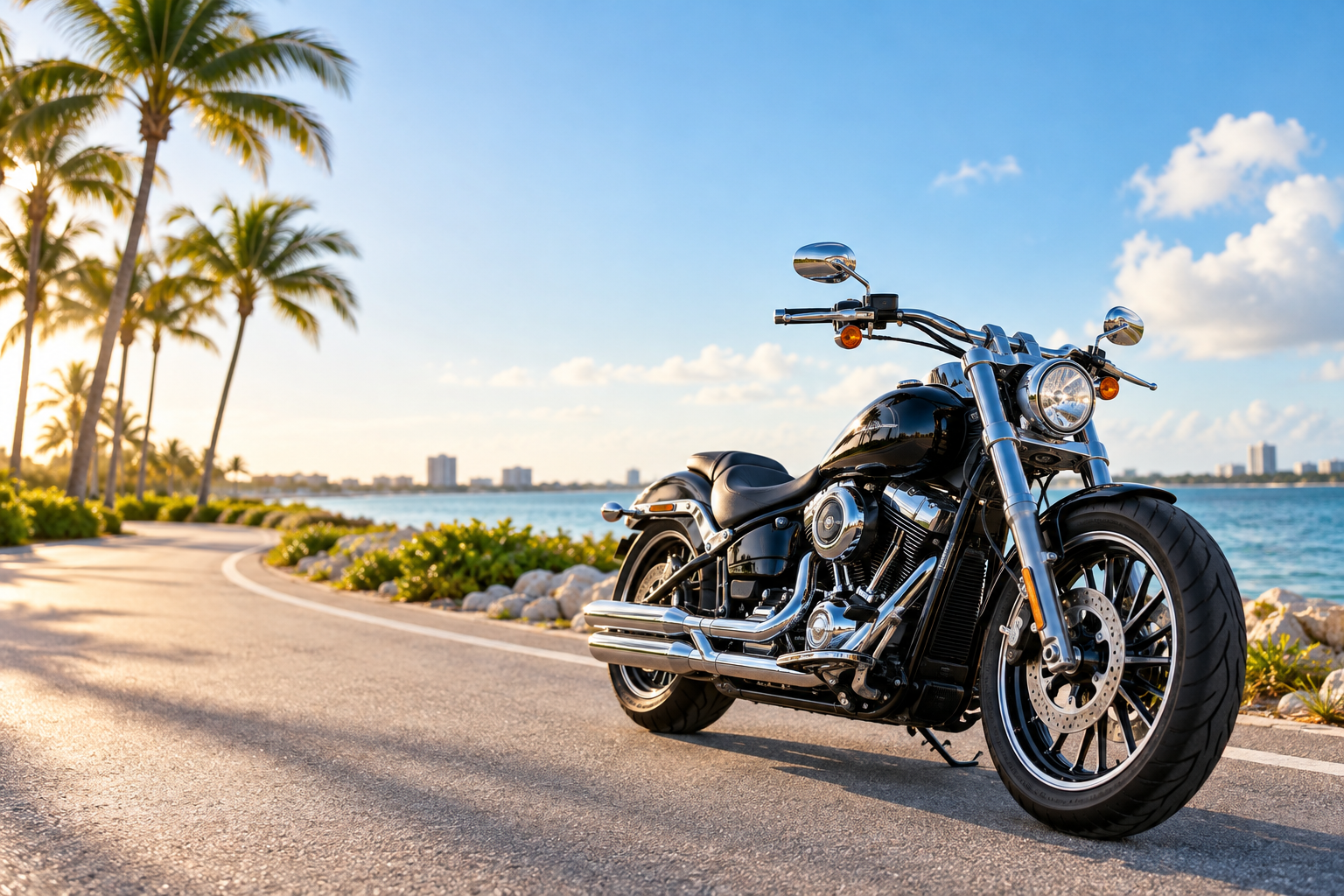
Riding a motorcycle offers freedom, adventure, and a unique way to enjoy Florida’s scenic roads. At It Matters Insurance, Inc., we help motorcycle owners explore insurance options designed to protect their bikes, themselves, and their financial security.
Whether you ride a cruiser, sport bike, touring motorcycle, or another type of eligible motorcycle, having the right insurance can help protect you against covered accidents, theft, physical damage, and liability claims.
Motorcycle insurance options may include bodily injury and property damage liability, collision, comprehensive, medical payments, uninsured and underinsured motorist coverage, and protection for eligible accessories and custom equipment.
Whether you’re purchasing your first motorcycle, upgrading your bike, or reviewing your current coverage, we’re here to help you explore protection that fits your riding needs and budget.
The right motorcycle insurance coverage matters. We’re here to help you understand your options and make informed decisions with confidence.
What Does Motorcycle Insurance Cover?
Motorcycle insurance helps protect riders and their motorcycles against covered accidents, theft, property damage, and liability claims. Depending on your policy, coverage may include bodily injury and property damage liability, collision, comprehensive, medical payments, and uninsured or underinsured motorist protection.
Coverage options may also be available for custom parts, riding accessories, roadside assistance, and other eligible equipment.
At It Matters Insurance, Inc., we help Florida motorcycle owners explore available insurance options, understand coverage limits, deductibles, and exclusions, and find protection that fits their riding needs and budget.
Florida generally does not require motorcycle owners to provide proof of insurance simply to register a motorcycle. However, certain financial responsibility and helmet-related insurance requirements may apply.
1. Motorcycle Registration
Unlike passenger cars, motorcycles generally do not have to carry Personal Injury Protection (PIP) insurance to meet Florida’s registration requirements.
2. Financial Responsibility After an Accident
Florida has financial responsibility laws that may apply following certain motorcycle accidents or traffic violations.
Under Florida’s financial responsibility provisions, applicable liability amounts may include:
* $10,000 bodily injury liability per person.
* $20,000 bodily injury liability per accident.
* $10,000 property damage liability per accident.
These are financial responsibility amounts, not a universal requirement to purchase motorcycle liability insurance before registration.
3. Helmet Requirements
Florida generally requires motorcycle riders younger than 21 to wear approved helmets.
Riders older than 21 may qualify to ride without a helmet if they maintain insurance providing at least $10,000 in medical benefits for injuries resulting from a motorcycle crash.
4. Financing Requirements
If your motorcycle is financed, your lender may require comprehensive and collision coverage to protect its financial interest.
Why consider motorcycle insurance?
Even when insurance is not required for registration, motorcycle coverage can help protect you financially against covered accidents, injuries to others, theft, and damage to your motorcycle.
At It Matters Insurance, Inc., we help Florida riders explore available motorcycle insurance options and understand coverage requirements, limits, and exclusions.
Important: Insurance requirements can vary based on your circumstances. Always verify applicable legal and lender requirements before riding.
Florida’s Personal Injury Protection (PIP) insurance requirements generally apply to qualifying four-wheeled motor vehicles, not motorcycles.
Does my regular auto PIP cover me while riding a motorcycle?
Generally, no. If you are injured while riding or occupying a motorcycle, you should not assume that the PIP coverage on your personal auto policy will pay your medical expenses.
What is the difference?
Auto Insurance: Florida generally requires qualifying registered passenger vehicles to carry at least $10,000 in PIP coverage and $10,000 in Property Damage Liability (PDL) coverage.
Motorcycle Insurance: Motorcycles are generally excluded from Florida’s mandatory PIP system. Motorcycle owners should consider other available coverage for injuries and liability.
What coverage options may help protect motorcycle riders?
Important for Florida motorcycle riders:
At It Matters Insurance, Inc., we can help you explore available motorcycle insurance options and understand how different coverages may protect you financially after an accident.
Florida has specific motorcycle helmet and eye protection requirements. Whether a rider may legally ride without a helmet depends on age and qualifying medical insurance coverage.
1. Riders Age 21 and Younger
Florida generally requires motorcycle operators and passengers age 21 or younger to wear a helmet that meets applicable federal safety standards.
2. Riders Over Age 21
A person older than 21 may ride without a helmet if they are covered by an insurance policy providing at least $10,000 in medical benefits for injuries resulting from a motorcycle crash.
3. Eye Protection Requirements
Florida generally requires motorcycle operators to wear approved eye protection, even when they qualify to ride without a helmet.
4. Does Regular Auto PIP Qualify?
Florida’s mandatory auto Personal Injury Protection (PIP) coverage generally does not extend to injuries sustained while occupying a motorcycle.
Riders should verify that their medical coverage specifically satisfies Florida’s helmet exemption requirements.
5. Does Motorcycle Insurance Automatically Meet the Requirement?
Not necessarily. A motorcycle liability policy alone may not provide the required medical benefits. Riders should confirm their qualifying coverage before choosing to ride without a helmet.
Important for Florida riders:
At It Matters Insurance, Inc., we can help you explore motorcycle insurance options and understand available medical payments coverage.
Motorcycle liability insurance helps protect you financially if you are legally responsible for injuries or property damage caused to others in a covered accident.
Bodily Injury Liability (BI)
Bodily injury liability may help pay for another person’s eligible medical expenses, lost income, and other damages if you are legally responsible for their injuries.
It may also help cover legal defense costs, subject to policy terms.
Property Damage Liability (PDL)
Property damage liability may help pay for damage you cause to someone else’s property, such as a vehicle, fence, or building.
Example:
Suppose you cause a motorcycle accident that injures another driver and damages their vehicle.
What do liability limits mean?
A policy with limits of 10/20/10 generally means:
These are examples of coverage limits, not a universal motorcycle insurance purchase requirement in Florida.
What does liability insurance not cover?
Liability coverage generally does not pay to repair your own motorcycle or cover your own injuries. Separate coverage may be available for those losses.
Important: Liability claims can exceed your insurance limits. Consider your financial exposure, policy exclusions, and available higher limits when choosing coverage.
At It Matters Insurance, Inc., we can help you explore available motorcycle liability coverage options based on your riding needs and budget.
Collision and comprehensive insurance are two types of physical damage coverage that may help pay to repair or replace your motorcycle after a covered loss.
Collision Coverage
Collision insurance generally helps pay for damage to your motorcycle resulting from a covered collision with another vehicle or object, or an overturn.
Example:
You lose control of your motorcycle and collide with a guardrail. Collision coverage may help pay for eligible repairs, minus your deductible.
Comprehensive Coverage
Comprehensive insurance, sometimes called other-than-collision coverage, generally helps protect your motorcycle against certain losses that do not involve a collision.
Covered events may include:
Example:
Your motorcycle is stolen from your driveway. Comprehensive coverage may help pay for the covered loss, subject to your policy’s deductible and claim settlement terms.
Do I need both coverages?
If your motorcycle is financed, your lender may require collision and comprehensive coverage.
If you own your motorcycle outright, these coverages are generally optional. However, they may help protect you from significant repair or replacement expenses.
Important for Florida riders:
At It Matters Insurance, Inc., we can help you compare motorcycle physical damage coverage options based on your bike’s value, riding habits, and budget.
Uninsured Motorist (UM) and Underinsured Motorist (UIM) coverage may help protect you financially if you are injured in an accident caused by a driver who has no insurance or not enough liability insurance.
1. Uninsured Motorist Coverage (UM)
May help compensate you for eligible injuries and damages when an at-fault driver does not have applicable bodily injury liability insurance.
2. Underinsured Motorist Coverage (UIM)
May provide additional compensation when an at-fault driver’s bodily injury liability limits are insufficient to cover your eligible damages.
What expenses may be covered?
Depending on your policy and the circumstances, UM/UIM coverage may help compensate you for:
Example:
Suppose another driver causes an accident that leaves you with $60,000 in eligible injury-related damages, but the driver has only $10,000 in bodily injury liability coverage.
Your underinsured motorist coverage may help address the remaining eligible damages, subject to your policy limits, applicable offsets, and coverage conditions.
What is stacked versus non-stacked coverage?
Important for Florida motorcycle riders:
At It Matters Insurance, Inc., we can help you explore available uninsured and underinsured motorist coverage options and understand how they may protect you after a covered accident.
Motorcycle insurance may provide coverage for custom parts, accessories, and riding equipment, but the amount of protection depends on your insurance policy.
1. Custom Parts and Equipment
Some motorcycle policies include limited coverage for custom equipment or allow you to purchase additional protection.
Eligible items may include:
2. Riding Gear
Some insurers offer coverage for eligible protective riding equipment, such as:
3. Factory Equipment Versus Aftermarket Accessories
Original factory-installed equipment may be covered as part of the insured motorcycle.
Aftermarket accessories and modifications may have separate coverage limits or require additional insurance.
Example:
Suppose your motorcycle has $5,000 in custom equipment, but your policy only includes $3,000 in applicable accessory coverage.
You may need additional coverage to adequately insure the remaining equipment.
Important for Florida riders:
At It Matters Insurance, Inc., we can help you explore available motorcycle accessory and custom equipment coverage based on your bike and riding needs.
Motorcycle insurance may offer roadside assistance and towing coverage to help when your motorcycle breaks down or becomes disabled. This protection is often optional and depends on your insurer and policy.
What may roadside assistance include?
Example:
You’re riding along Florida’s Gulf Coast when your motorcycle experiences a mechanical problem and cannot be safely driven.
If your policy includes roadside assistance, it may help pay for eligible towing expenses, subject to your coverage limits.
Does roadside assistance pay for motorcycle repairs?
Generally, no. Roadside assistance typically covers eligible emergency services rather than the cost of repairing a mechanical failure or replacing worn parts.
Important for Florida riders:
At It Matters Insurance, Inc., we can help you explore available roadside assistance and towing options based on your motorcycle and riding needs.
Motorcycle insurance premiums vary depending on your motorcycle, riding experience, location, coverage selections, and insurance company. There is no single price that applies to every Florida rider.
What factors affect motorcycle insurance premiums?
1. Motorcycle Type and Value
Sport bikes, cruisers, touring motorcycles, and other types of motorcycles may have different insurance costs based on their value, performance, and repair expenses.
2. Riding Experience and Driving Record
Your riding experience, accidents, traffic violations, and claims history may affect your premium.
3. Location
Where you live and primarily store your motorcycle can influence insurance pricing, including exposure to theft, traffic accidents, and severe weather.
4. Coverage Limits and Deductibles
Higher coverage limits may increase your premium. Choosing a higher deductible may lower the cost of physical damage coverage but increases your out-of-pocket expenses after a covered loss.
5. Motorcycle Use
How often you ride, your annual mileage, and whether the motorcycle is used for commuting or recreation may affect available rates.
6. Discounts
Depending on the insurer, discounts may be available for:
How can I compare motorcycle insurance costs?
Review quotes with similar liability limits, deductibles, physical damage coverage, medical payments, and uninsured motorist options.
Important: The least expensive policy does not always offer the protection you need. Discounts, eligibility, and pricing factors vary by insurer and applicable Florida rating rules.
At It Matters Insurance, Inc., we can help you explore available motorcycle insurance options and compare coverage based on your riding needs and budget.
Motorcycle insurance may provide protection for passengers and other people who operate your motorcycle, but coverage depends on your policy, the circumstances of the accident, and the coverages you’ve selected.
1. Passenger Injuries
If a passenger is injured in a covered motorcycle accident, certain insurance protections may apply, including:
2. Can Someone Else Ride My Motorcycle?
Some motorcycle policies may cover another person who rides your motorcycle with your permission.
However, coverage depends on whether the rider is eligible under your policy and meets applicable licensing and underwriting requirements.
3. What if the Rider Is Not Listed on My Policy?
Some insurers require regular operators or household members to be listed on the policy. An unlisted or excluded rider may have limited or no coverage.
4. What About Rental or Commercial Use?
Standard personal motorcycle insurance may exclude certain rental, delivery, or commercial activities. Specialized coverage may be necessary.
Important for Florida motorcycle owners:
At It Matters Insurance, Inc., we can help you explore available motorcycle insurance options and understand coverage for passengers and other eligible riders.
If you’re involved in a motorcycle accident in Florida, taking the appropriate steps can help protect your safety, document the incident, and support the insurance claims process.
1. Prioritize Safety
Check yourself and others for injuries. Call 911 if someone is injured or there is an emergency. Move to a safe location when possible, but do not move a seriously injured person unless necessary to avoid immediate danger.
2. Contact Law Enforcement When Required
Florida law requires certain traffic crashes to be reported, including crashes involving injury, death, or other circumstances specified by law. Contact law enforcement when necessary and follow their instructions.
3. Exchange Information
When safe, exchange names, contact information, driver’s license details, vehicle information, and insurance information with the other parties involved.
4. Document the Accident
Take photographs of the vehicles, damage, road conditions, and accident scene when it is safe to do so. Record witness contact information if available.
5. Seek Medical Attention
Motorcycle accidents can cause serious injuries. Seek prompt medical evaluation, even if your symptoms initially seem minor.
6. Notify Your Insurance Company
Report the accident promptly using your insurer’s claims department or approved reporting process. Follow your policy’s reporting requirements.
7. Review Your Coverage and Claim
Check your applicable liability, collision, comprehensive, medical payments, and uninsured motorist coverages. Keep records of medical bills, repair estimates, claim communications, and other expenses.
Important for Florida motorcycle riders:
At It Matters Insurance, Inc., we’re here to help you understand your motorcycle insurance coverage and find the appropriate claims reporting resources.